Why Sharp Garden Tools Help Plants Heal Faster
A dull pruner can turn a simple trim into plant damage. It still gets through the stem, sure, but it often crushes, shreds, and tears the tissue on the way. That ragged edge takes longer to seal, loses more moisture, and gives fungi and bacteria more places to settle in.

Sharp garden tools do more than make pruning easier on your hands. They help plants recover faster because they make clean cuts, and clean cuts are much easier for a plant to close off.
That matters all year, but it really matters after cold snaps, storm damage, or seasonal pruning. In places like Brevard County, where warm weather plants can get surprised by a winter freeze, the way you remove damaged growth can affect how well the plant bounces back.

Clean cuts are easier for plants to seal
Plants don’t heal the way skin heals. They don’t rebuild the exact damaged tissue. Instead, they seal off the wound and grow around it. This process is often called compartmentalization, and it helps limit decay from spreading into healthy tissue.
A sharp blade makes that job easier.
When you cut a branch cleanly, the plant has a neat wound surface to close over. The cells around the cut can dry, seal, and form protective tissue more evenly. That doesn’t mean the plant loves being pruned, but it does mean the damage is controlled.
A dull blade does the opposite. It can mash the stem before it cuts through. On woody branches, it may leave splinters or bark tears. On soft green stems, it can collapse the tissue and leave a wet, bruised-looking edge.
Think about cutting a tomato with a sharp kitchen knife versus a butter knife. One slice is smooth. The other squashes the fruit before it separates. Plant stems react in a similar way.
Extension pruning guides, including those from university extension programs such as UF/IFAS Extension, commonly recommend sharp, clean tools because smooth cuts reduce unnecessary injury and make pruning safer for the plant.

Dull blades crush and tear plant tissue
A cut isn’t just a cut. The quality of the cut matters.
Dull tools often leave damage you can see right away:
Sharp blade
Dull blade
Sharp blade
Dull blade
Sharp blade
Dull blade
Makes a smooth cut with less pressure
Crushes, bends, and tears before cutting
Leaves bark and stem tissue more intact
Creates ragged edges that dry unevenly
Helps the plant seal the wound faster
Can leave openings where decay can start
Those ragged openings are the big problem. Disease organisms need an entry point, and torn plant tissue gives them plenty. Moisture can sit in shredded fibers, especially in humid climates. That’s one reason clean pruning matters so much near the coast, where damp mornings, rain, and warm air can keep plant surfaces wet longer.
This doesn’t mean every ragged cut will lead to disease. Plants are tougher than they look. But when the goal is healthy plants, there’s no reason to make recovery harder.
The same goes for lawns and ornamental grasses. A dull mower blade tears grass tips instead of slicing them. Those torn tips often turn tan or brown, which can make a lawn look stressed even when it has enough water.
Freeze damage needs extra patience and cleaner cuts
After a freeze, it’s tempting to run outside and cut everything brown. Try to wait.
Cold-damaged leaves and stems can look terrible, but the full damage may not show right away. Some stems that look dead near the tip may still be alive closer to the base. Cutting too early can remove growth that might have recovered, and it can expose tender tissue if another cold night follows.
Once new growth starts to show, the dead parts are easier to spot. That’s the time to prune with sharp tools.
For freeze-damaged plants, clean cuts help in a few ways:
They remove dead tissue without tearing into living stems.
They reduce stress on already weakened plants.
They leave less damaged surface area exposed to moisture and decay.
They help shape the plant without over-pruning.
This is especially helpful for tropical and subtropical plants common in Central Florida yards, like hibiscus, crotons, bougainvillea, firebush, and some palms. These plants may push new growth after a cold spell if the roots and lower stems stayed alive.
Use your fingernail to lightly scratch a questionable stem. If the layer under the bark is green, that part may still be living. If it’s brown and dry, prune back to healthy tissue. Make the cut just above a bud, leaf node, or branch junction when possible.

A sharp tool also protects you
Sharp tools aren’t just better for plants. They’re safer and easier to use.
That may sound backward if you’ve ever nicked your finger on a sharp blade, but dull tools cause a different kind of risk. They make you squeeze harder, twist your wrist, or force the cut. That’s when pruners slip, branches split, and hands get strained.
A sharp bypass pruner should cut a small stem with a clean squeeze. Loppers should not need your full body weight for a branch within their rated size. If you’re fighting the tool, the blade is probably dull, the branch is too large, or both.
Here’s a simple rule that works well in the yard:
If the tool crushes before it cuts, stop and sharpen it.
That one habit can save plants from damage and save your hands from a long afternoon of extra work.
How to keep your tools sharp and ready
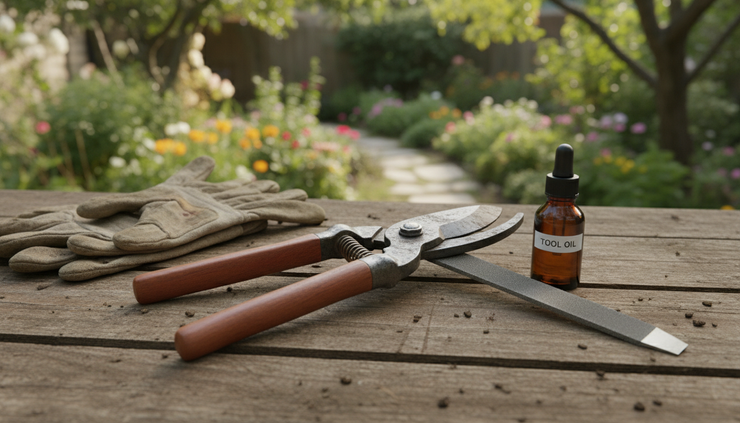
You don’t need a fancy setup. A basic sharpening file, diamond sharpener, or whetstone can handle most garden blades. The key is doing it before the tool gets truly bad.
A quick maintenance routine helps:
Wipe sap and dirt off blades after pruning.
Dry tools before putting them away.
Sharpen along the existing bevel instead of changing the blade angle.
Oil the pivot point on pruners and loppers.
Tighten loose screws or bolts when the blades wobble.
Disinfect tools after cutting diseased plants.
For disinfecting, many gardeners use rubbing alcohol or a household disinfectant. Bleach solutions are also used, but they can corrode metal if left on the tool. Whatever you use, dry the blade afterward.
Don’t forget mower blades. If the lawn looks frayed after mowing, the blade may need sharpening. A clean mower cut helps grass recover faster, especially during hot, wet growing seasons.
Cut smart, not just sharp
A sharp blade helps, but timing and placement matter too.
Try not to leave long stubs when pruning branches. Stubs often die back and can become entry points for decay. Cut back to a branch collar on woody plants, or just above a healthy node on softer stems.
Avoid cutting flush against the trunk, since that can damage the natural sealing area. On many trees and shrubs, the slight swelling where a branch meets a larger stem is the branch collar. That area helps the plant close the wound.
Also avoid pruning heavily right before extreme heat, drought, or another expected cold snap. Pruning pushes a plant to respond, and stressed plants don’t always have the energy to recover well.
Keep your tools sharp and your work smart. A clean cut is a small thing, but it gives every plant a better start after pruning, storm cleanup, or freeze damage. The next time a stem needs trimming, take a second to check the blade first. Your plants will show the difference.


Comments