Why Sharp Garden Tools Are Safer and Better for Your Plants
Updated: Sep 18
You’ve probably heard someone say, “Sharp knives are actually safer.” It sounds backward at first, but it’s true. A sharp blade cuts cleanly with less force, while a dull one makes you push harder and lose control.
The same idea applies outside in the garden.

When pruners, loppers, shears, hoes, and shovels get dull, the work gets harder. Dull tools slip, twist, and chew through stems instead of slicing them. That’s rough on your hands, rough on your plants, and rough on the tool itself.
Keeping Gardening tools sharp isn’t about being fussy. It’s about working safer, making cleaner cuts, and helping plants recover faster.

Dull tools make gardening harder than it needs to be
A dull tool asks for more muscle.
That’s true whether you’re pruning hibiscus, trimming palm suckers, cutting back ornamental grasses, or digging through sandy Florida soil with a shovel that hasn’t seen a file in years.
When a blade is dull, it doesn’t bite into the material right away. So you squeeze harder. You lean harder. You twist your wrist without meaning to. That extra force creates the exact situation where accidents happen.
A dull pair of pruners can suddenly slip off a branch. A dull knife can jump out of a stem. A dull shovel can glance off a root. None of that is fun when your fingers, knees, or shins are nearby.
Sharp tools give you better control because they do the work they’re designed to do. You don’t have to fight them. You guide them.
Think about cutting a tomato with a dull kitchen knife. You press down, the skin resists, and the knife can slide sideways. A sharp knife starts the cut with less pressure. Garden tools work the same way.
Clean cuts help plants heal better
Plants don’t “heal” exactly like people do, but they do seal off damaged tissue. A clean pruning cut gives the plant a much better chance of doing that quickly.
A sharp blade slices through stems and branches with less crushing. A dull blade mashes the tissue, tears bark, and leaves ragged edges. Those ragged edges dry out unevenly and create more surface area for pests and disease to enter.
University extension pruning guides commonly recommend using clean, sharp pruning tools because clean cuts close more easily and reduce unnecessary plant stress. That advice matters in a real backyard, especially in warm, humid places like Brevard County where plant diseases can spread quickly after rain or irrigation.
Here’s what that looks like in practice:
Sharp pruners
Leave a smooth, angled cut that sheds water and closes more cleanly.
Dull pruners
Crush the stem, peel bark, and leave a ragged wound.
Sharp hedge shears
Trim foliage cleanly with less browning on the tips.
Dull hedge shears
Tear leaves and make hedges look browned, bruised, or fuzzy a few days later.
That’s why your plants may seem to stall after a hard pruning with dull blades. They’re spending energy dealing with damaged tissue instead of putting it into fresh growth.

Sharp blades make pruning more accurate
Good pruning is partly about judgment, but it’s also about precision. You want the cut in the right place, usually just above a node, bud, or branch collar depending on the plant.
That’s harder with a dull blade.
When pruners drag or squeeze instead of cut, the blade can shift before it finally snaps through. That can leave stubs, damage nearby buds, or cut too close to the main stem.
A sharp blade lets you place the cut where you want it and finish the cut in one smooth motion.
That matters for common home garden jobs like:
Deadheading roses and flowering shrubs
Cutting herbs without bruising them
Harvesting vegetables cleanly
Removing dead or crossed branches
Shaping hedges and small ornamentals
Trimming vines before they get out of hand
Sharp tools also make the work feel better. If you’ve ever pruned for 30 minutes with dull hand pruners, you know the ache that creeps into your palm. Clean, sharp blades reduce hand fatigue because you’re not squeezing as hard over and over.
Different tools need different kinds of edges
Not every garden tool should be sharpened the same way. A pruning blade needs a clean bevel. A shovel needs a sturdy working edge. A hoe should be sharp enough to slice weeds just below the soil surface. Hedge shears need matching blades that meet correctly along their length.
That’s why it helps to know when a quick touch-up is enough and when the tool needs a professional.
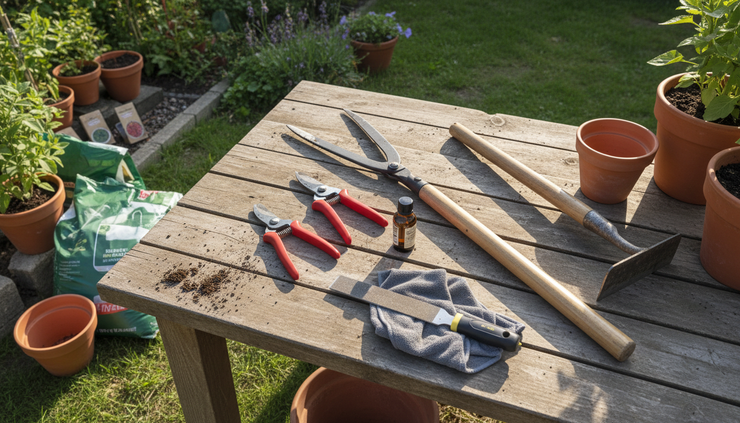
For light maintenance, many gardeners use:
A sharpening stone
A diamond file
A mill file for shovels and hoes
A little oil to prevent rust
A rag and rubbing alcohol for cleaning blades
Clean the tool first. Dirt and sap make sharpening harder and can hide nicks in the edge. For sap buildup, a mild cleaner or rubbing alcohol usually helps. Dry the tool well afterward, especially in a humid coastal climate.
For bypass pruners, sharpen only the beveled cutting blade. Don’t grind both sides like a kitchen knife unless the tool was made that way. For anvil pruners, the cutting blade still needs shape, but the flat anvil should stay smooth and clean.
If the blade has deep chips, bent tips, loose pivots, or uneven contact, a professional sharpener is often the better call. They can restore the correct angle without removing too much metal.
Pay attention to the signs that your tools are dull
A tool doesn’t need to be completely useless before it needs attention. Most tools show warning signs long before that.
Look for these clues:
The tool crushes stems instead of cutting them
You need both hands for cuts that used to be easy
Pruners leave bark strips or ragged edges
Hedge shears fold leaves instead of clipping them
A shovel bounces off roots instead of biting in
The blade has visible nicks, rust, or a shiny rounded edge
That shiny rounded edge is a big one. A sharp edge catches light less evenly because it comes to a fine point. A dull edge often reflects a little line of light along the blade.
Also, listen to the tool. Sharp pruners usually make a clean snip. Dull or misaligned pruners crunch, squeak, or bind.
A sharp tool is also a cleaner tool
Sharpness and cleanliness go together.
After pruning diseased branches or sticky plants, wipe the blades before moving to the next plant. This reduces the chance of spreading disease from one plant to another. You don’t have to make it complicated. Keep a rag and disinfectant handy when you’re doing a lot of pruning.
At the end of the job, dry the tool and add a light coat of oil to metal parts. That helps prevent rust, which is especially useful near the coast where humidity and salt air can be hard on tools.
Store tools somewhere dry if you can. Leaving pruners in damp grass or a shovel outside in the rain shortens their life fast.

Keep your tools sharp and your work smart
Dull tools turn simple garden jobs into a fight. They make you use more force, raise the chance of slipping, and leave plants with crushed, ragged cuts that take longer to recover from.
Sharp tools are safer because they cut with less effort and more control. They’re better for plants because they make clean cuts that seal more easily. They’re better for you because the work is smoother, faster, and easier on your hands.
If your pruners, shears, loppers, hoes, or shovels aren’t cutting like they used to, don’t wait until they’re frustrating. Clean them up, touch up the edge if you know how, or contact a good professional sharpener to bring them back to life.
Keep your tools sharp and your work smart.


Comments